
Going back to school as an adult is brave. Doing it with ADHD is next-level brave. It means stepping back into a world that may have once misunderstood you, labeled you, or left you feeling “not enough.”
But here’s the truth: You’re not behind. You’re not broken. And you are not alone.
Whether you’re returning to finish your high school diploma, attending university, starting vocational training, or exploring a new passion, your ADHD doesn’t disqualify you—it gives you a different lens, one filled with curiosity, resilience, and depth.
This article is a guide for navigating school as an adult with ADHD—with less shame, more strategy, and a lot more self-compassion.
1. The Emotional Baggage of Returning
Before diving into books and syllabi, many adults returning to school with ADHD face something invisible but heavy: shame.

You might think:
- “Why didn’t I do this sooner?”
- “What if I fail again?”
- “I wasn’t good at this the first time—why would it be different now?”
But these thoughts are rooted in old systems that weren’t built for neurodivergent learners.
You didn’t fail school. School may have failed you.
And now, you’re stepping back in with more self-awareness, more tools, and the power of experience.
Reframing your story is the first step:
You’re not starting over.
You’re starting wiser.
2. ADHD-Specific Challenges in Adult Learning
Being a student with ADHD comes with familiar struggles—but also new adult pressures. You might be juggling:

- Work and study
- Parenting
- Managing your own household
- Mental health and executive dysfunction
And ADHD adds a layer of complexity:
🧠 Difficulty focusing in long lectures or readings
🧠 Procrastination and time blindness
🧠 Forgetting assignments or deadlines
🧠 Emotional dysregulation when overwhelmed
🧠 Imposter syndrome in academic settings
But knowledge is power. When you understand your ADHD, you can start working with your brain, not against it.
3. ADHD-Friendly Strategies for Academic Success
Here’s where we flip the script. You don’t need to “try harder”—you need to try differently. These strategies are tailored for neurodivergent adult learners:
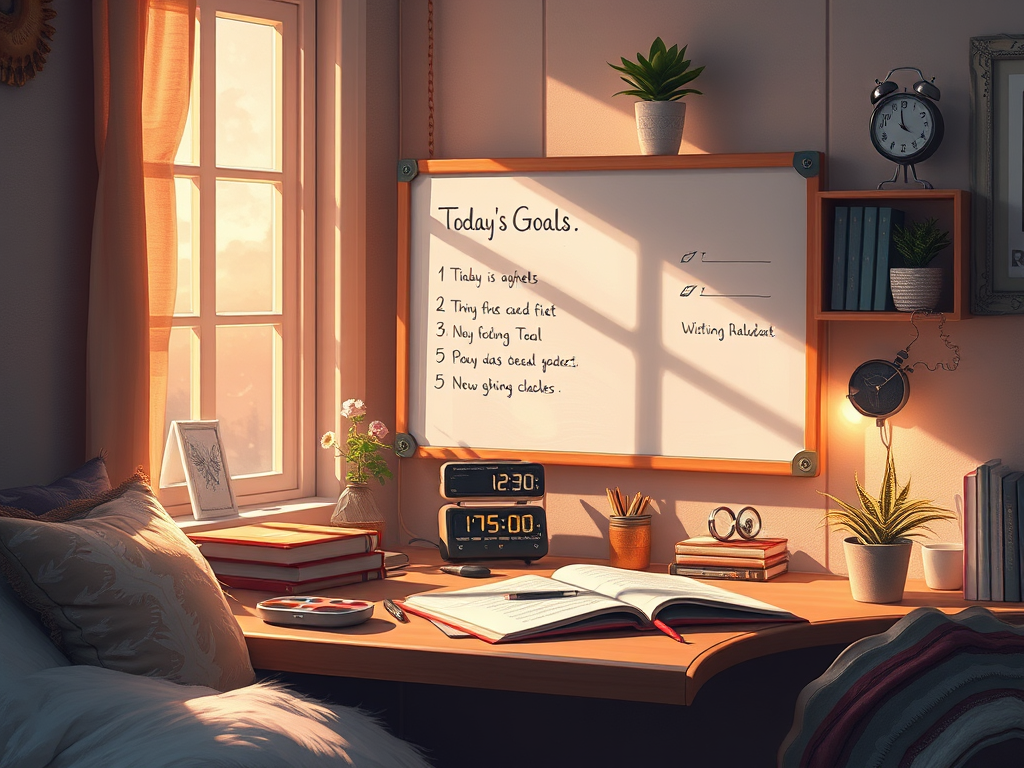
✅ Use External Tools for Internal Clarity
- Digital planners or paper checklists to track tasks
- Alarms and reminders for class, study sessions, and breaks
- Color-coded folders and highlighters to stay visually organized
✅ Break It Down to Beat Overwhelm
- Chunk large assignments into micro-steps: research → outline → intro → draft
- Use the “10-minute rule” to get started on tough tasks
- Reward yourself after each small win (yes, even reading 2 pages counts!)
✅ Embrace Learning Styles That Fit You
- If you’re a visual learner: use diagrams, videos, and doodles
- If you’re a kinesthetic learner: walk while listening to audiobooks or fidget while reviewing notes
- If you’re a verbal learner: talk through topics with a classmate or record yourself explaining them
✅ Advocate for Your Needs
- Request accommodations (extra time, note-taking help, quiet test environments)
- Let your instructor know you have ADHD if you feel safe doing so—it can create space for support
- Connect with your school’s disability services office early
4. Combatting Shame with Compassion
You are not “too late.” You are right on time for your journey.
The shame you carry isn’t yours to hold. It came from environments that didn’t understand how ADHD affects learning.

What you’re doing now is powerful. You’re:
💙 Reclaiming your education
💙 Setting an example for your kids or loved ones
💙 Proving to yourself that growth has no age limit
When shame creeps in, try saying:
“I’m doing something hard. And I’m doing it anyway.”
“I deserve the chance to succeed with support.”
“I’m allowed to take up space in the classroom.”
5. Finding Support and Staying Motivated
No one thrives alone—especially in neurodivergent life. Here’s how to keep your momentum strong:
🌟 Find ADHD Study Buddies
- Body doubling (working quietly alongside someone) works wonders
- Join online ADHD student groups or forums
- Study in libraries or coffee shops for helpful background stimulation
🌟 Schedule Breaks and Rest
- Your brain needs recovery time—don’t power through
- Use the Pomodoro method (25 min work / 5 min break)
- Allow space for joy and hobbies outside of academics
🌟 Track Progress Visually
- Use a wall calendar, sticker chart, or checklist app
- Seeing what you’ve accomplished is more motivating than you think
Final Thoughts: Your Success Is Valid at Any Age
Returning to school as an adult with ADHD isn’t easy—but neither is living a life where you feel you’ve given up on yourself. This path is courageous. It’s healing. It’s yours.
Let go of the old stories that said you weren’t smart enough, focused enough, or “academic” enough.
You are more than enough.
You are capable.
You are growing.
And you’re allowed to do it imperfectly.
You’re not just earning credits—you’re reclaiming your confidence, one class, one quiz, one beautiful moment at a time.
💙 Support My Work on Buy Me a Coffee
If this blog post gave you clarity, motivation, or comfort, consider supporting my writing at Buy Me a Coffee.
Every coffee helps me continue creating neurodivergent-friendly resources, sharing lived experiences, and reminding people like you that it’s never too late to start again with compassion and courage.
Thank you for being part of this journey. I’m cheering for you. ☕📚💙
 TrueJourney